.jpg/:/rs=h:200,cg:true,m/qt=q:95)
.jpg/:/rs=h:104,cg:true,m/qt=q:95)
Ocean and land turtles
.. .Sea turtle legs are shaped for swimming. These are called flippers, not fins like on a fish. They have large shoulder muscles that fill-up the spaces around their necks. They don't pull their heads down into their shells.
Helmet shaped land turtles are much smaller than sea turtles. They are called Gopher Tortoise (Gopherus polyphemus) are sometimes seen crossing a beach. The gopher tortoise is Florida's state tortoise and can be found in all 67 counties. The gopher tortoise is classified as threatened species throughout the state. They have legs for walking and digging, not flippers. Please DO NOT put them into the water. They don't swim. The turtle model at this station is about 2 and 1/2 times larger than the typical Florida gopher tortoise that is about 9-11 inches. Gopher tortoises spend a lot of time in their burrows, which they prefer to dig in well drained sandy soil. Known as a keystone species, and therefore its survival is essential for hundreds of other animals' survival, these species are referred to as commensals. The burrow protects the tortoise from predators, heat, cold and fire. Both the tortoise and their burrow are protected, so give them plenty of space.
Females lay their eggs usually in the apron (sandy area) in front of the opening of their burrow. The average number of eggs is 8-10.
It is okay to help them across a road in the direction they were going, but please be careful in traffic.
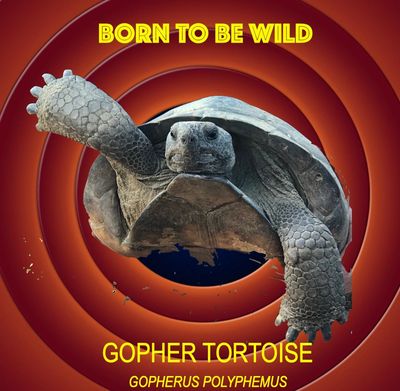
Gopher tortoise resources

Coastal Wildlife Club obtained these signs provided by Florida Wildlife Federation


Reptiles can live a very long time and require a long term commitment for continued quality care. Turtles and tortoises are best left in the wild.
Gopher Tortoise Council

The gopher tortoise is an ecosystem engineer. Its burrow provides refuge for 360+ other species. These species are known as commensals or burrow buddies. Find more information about gopher tortoises from the Gopher Tortoise Council's website:
https://gophertortoisecouncil.org/education-outreach
Challenge: What is a keystone species?

Gopher Tortoise Friendly Yard
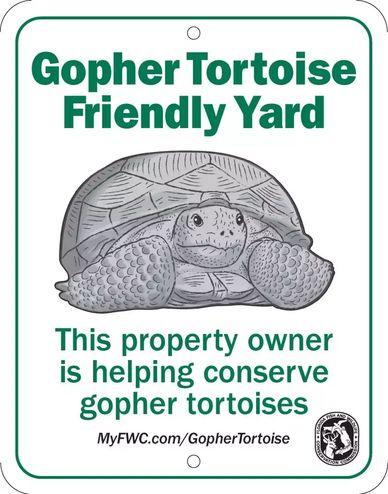
Did you know that your yard can be a gopher tortoise friendly yard? Find out how:
https://myfwc.com/wildlifehabitats/wildlife/gopher-tortoise/yard-recognition/